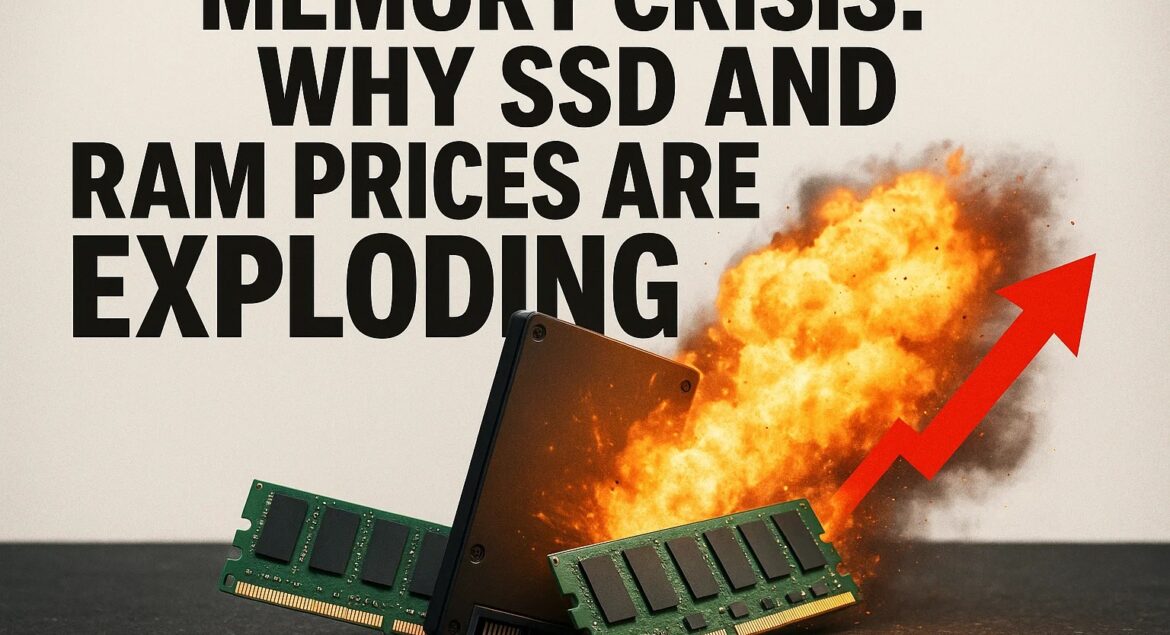
Here’s a clear explanation of why RAM and memory card prices have increased
📈 1. Huge Demand from AI and Data Centers
- The biggest driver of higher RAM and memory prices is explosive demand from artificial intelligence (AI) systems and cloud data centers. These systems use enormous amounts of memory — often much more than traditional computers — and companies are buying huge quantities to train and operate AI services.
- Major tech firms are securing memory supplies years ahead through long-term contracts, leaving less available for regular consumer products like PC RAM and camera memory cards.
📉 2. Shift of Production to Higher-Margin Memory Types
- Memory manufacturers (e.g., Samsung, SK Hynix, Micron) are prioritizing production of high-bandwidth memory (HBM) and enterprise/server RAM for AI and data centers because those products are more profitable. This reduces the production capacity available for standard DDR RAM and NAND flash used in memory cards.
- Many fab lines have been partially repurposed to produce advanced memory rather than consumer memory.
📦 3. Supply Constraints & Limited Manufacturing Capacity
- Building new semiconductor manufacturing facilities is very expensive and slow — taking years and large investments. Because of cautious capacity expansion after past downturns, supply hasn’t kept up with demand.
- Existing fabs are near full capacity, so any increase in demand quickly tightens supply, pushing prices up.
🔄 4. Transition to Newer Technologies
- The industry is shifting from older DDR4 memory to DDR5 and newer standards. DDR5 is more advanced but also more costly to produce, contributing to price increases in both older and new modules.
- Older product lines get phased out, reducing supply of cheaper memory types and inadvertently raising their prices too.
🧰 5. Supply Chain & Material Costs
- Memory cards and chips use specialized materials (e.g., high-purity silicon, rare gases). Global supply chain disruptions, geopolitical tensions, and higher raw material prices all add cost.
- Trade policies, tariffs, and logistical issues can also increase import/export costs for components and finished products.
🏪 6. Industry Market Structure
- A small number of large manufacturers dominate global memory production, so when supply tightens or demand spikes, prices adjust quickly because there aren’t many competitors to push them down.
🧠 In simple terms
- More demand from AI + less consumer-focused production = less supply.
- Limited production capacity + expensive technology shifts = higher costs.
- Supply chain and material pressures add extra price bumps.
Written by: RAJMOHAN JAYAKRISHNAN (Founder Of TRYAKSH STORE)
Gaming & Tech Content Writer